

As a distributed and public ledger, blockchain benefits versatile fintech and business branches due to its possibility to record transactions that cannot be blockchain accounting altered. The impact of blockchain in accounting is significant as it eliminates manipulations with records and minimizes human errors. We’re going to focus on fraud prevention and error detection capabilities of blockchain in accounting. Blockchain creates an immutable ledger where all transactions are recorded and time-stamped.

Corporate reporting
- From one viewpoint, blockchain is a top accounting trend as it makes processes quicker, more accurate, and more reliable.
- AI can help make sense of all the data that blockchain provides, spotting trends and making predictions that would be impossible for humans to see.
- Please see /about to learn more about our global network of member firms.
- This support is essential for the growth of the web3 space, enabling businesses to push for consumer adoption in the blockchain ecosystem.
- Presently, over 1,600 digital currencies using blockchain are in circulation.
- As these transactions are verified and time-stamped, the need for external audits may decrease, as auditors can directly access and analyze the immutable blockchain records.
And when you begin to watch produce and different industry verticals leveraging blockchain technology in production today, all those firms leverage participants in the accounting profession. The Rutgers blockchain and smart contracts in accounting is a standalone program and a stackable concentration for an MBA in professional accounting. The four-course online program covers audit analytics, blockchain in accounting, and smart contract applications in accounting. Learners also complete Bookkeeping 101 an audit analytics capstone project requiring research and a real-world application of analytics in an auditing scenario.
- In this article, we’ll discuss the role of blockchain in accounting, its benefits, how it works, its impact on the accounting industry, and real-world use cases.
- These future developments indicate that the role of blockchain in accounting will continue to expand and revolutionize the profession.
- Understand key principles, revenue recognition methods, and best practices to improve your knowledge.
- The technology ensures that records are consistent and tamper-proof, which enhances trust and compliance with regulatory standards.
- A total of three entries will be created, because each party (the two parties involved in the transaction and the intermediary) creates a record for the transaction (Grigg 2005).
- This means that it’ll also save you and your bookkeeper tons of time while also making it easier to audit your own financial records.
Streamlining Traditional Accounting Processes
- A smart contract is one of many blockchain applications that can streamline tedious tasks in today’s accounting.
- This transparency can be particularly beneficial during audits, as auditors can easily trace the history of transactions and verify their authenticity.
- Peyman Khosravani is a seasoned expert in blockchain, digital transformation, and emerging technologies, with a strong focus on innovation in finance, business, and marketing.
- Blockchain’s decentralized nature plays an important role in securing financial data.
- This will help you identify potential challenges and how to overcome them.
- Today, blockchain miners spend time creating more Bitcoin by verifying the mathematical computations behind transactions with the currency using high-tech computers.
The integration of AI and blockchain has not only streamlined traditional accounting practices but also redefined how financial data is managed, processed, and reported. Blockchain technology, in particular, is a transforming force to ensure financial data integrity and eliminate the risk of tempering using its decentralized ledger system. Besides accounting, blockchain technology can also impact the auditing field. Essentially, auditors confirm transactions and balances from the financial statements. However, they use client ledgers and accounting records to achieve that. Blockchain’s impact on accounting also translates to the work that auditors perform.

3 Security Concerns
- The accounting industry is also reaping the benefits of Blockchain technology because of its reliability and open-source attributes.
- This is a brilliant new technology, but there will still be plenty of work for current accountants, auditors, and financial professionals.
- However, as the technology matures, it is expected to become an integral part of the accounting landscape, transforming how financial data is managed and audited.
- Before discussing those uses, it is crucial to understand what blockchain is.
Besides the foundational blockchain infrastructure, the Casper Network has the smart contract capacity, designed to be dynamic through oracles payroll and future course corrections. The smart contract capacity on the Blockchain allows businesses to structure, execute and automate their interaction with clients in a way that all stakeholders agree on. Also, because every change must be approved through a consensus mechanism on a peer-to-peer network of computers, the records are protected from hacking and actions by untrustworthy actors. Auditors often have to reach out to entities that transacted with the business they are looking at to confirm transactions. While this might help uncover errors, it comes at the cost of time, labor, and fees.

The Critical Importance of an Accurate Balance Sheet
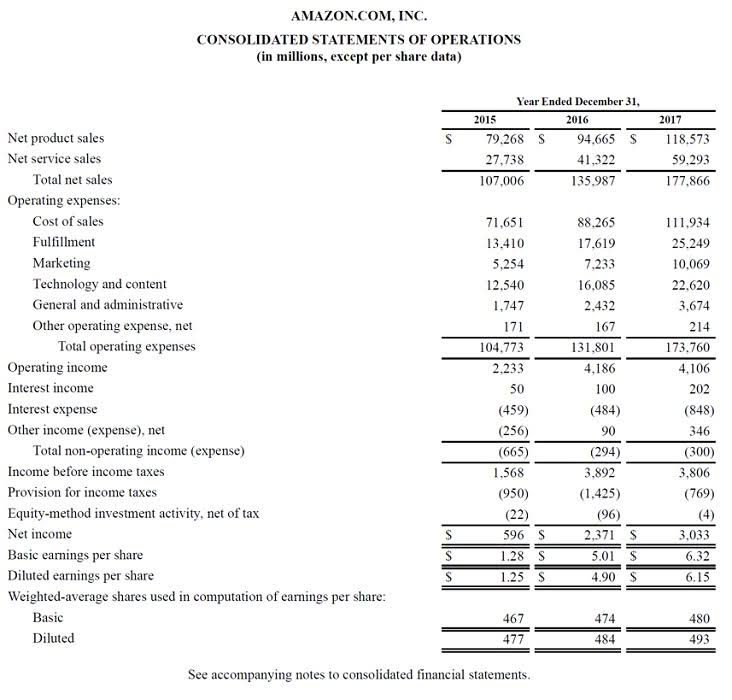
These include the need for standardization, scalability, and regulatory compliance. However, as organizations and regulators continue to explore and understand the technology, the future of blockchain in accounting looks promising. Blockchain, in simple terms, is a decentralized and transparent digital ledger that records and stores information across a network of computers.

On January 12, the first Bitcoin transaction occurred when Nakamoto sent Finney 10 Bitcoin. Before the end of the year, he’d introduced Bitcoin Market, a public platform where people could trade paper money for bitcoin and join in the trading process. Blockchain technology’s transformative potential extends beyond theory, as demonstrated by its successful implementation in various real-world scenarios. Deloitte refers to one or more of Deloitte Touche Tohmatsu Limited, a UK private company limited by guarantee (“DTTL”), its network of member firms, and their related entities. DTTL and each of its member firms are legally separate and independent entities. DTTL (also referred to as “Deloitte Global”) does not provide services to clients.
